Call us today! 031 312 9273 | heather@modenadurban.co.za

Call us today! 031 312 9273 | heather@modenadurban.co.za

Building information modelling (BIM) is the foundation of digital transformation in the architecture, engineering and construction (AEC) industry. But using powerful software like Revit does not automatically mean one is using BIM. By Kirsten Kelly

Tammy Venter, team lead:
AEC and BIM implementation
specialist, Modena (Durban)
Cloud platforms – such as Autodesk’s BIM 360 and Autodesk Construction Cloud
– create collaboration for a traditionally fragmented AEC industry. Models are uploaded into the cloud and if anyone from the professional team makes a change to their design, that change is incorporated in all the models and is available to everyone almost immediately. This builds a seamless process where there is, for example, a single architectural model, structural model and mechanical model where changes are reflected instantly across the entire design team. The cloud environment is governed by the BIM execution plan, where the project team agrees on items such as:
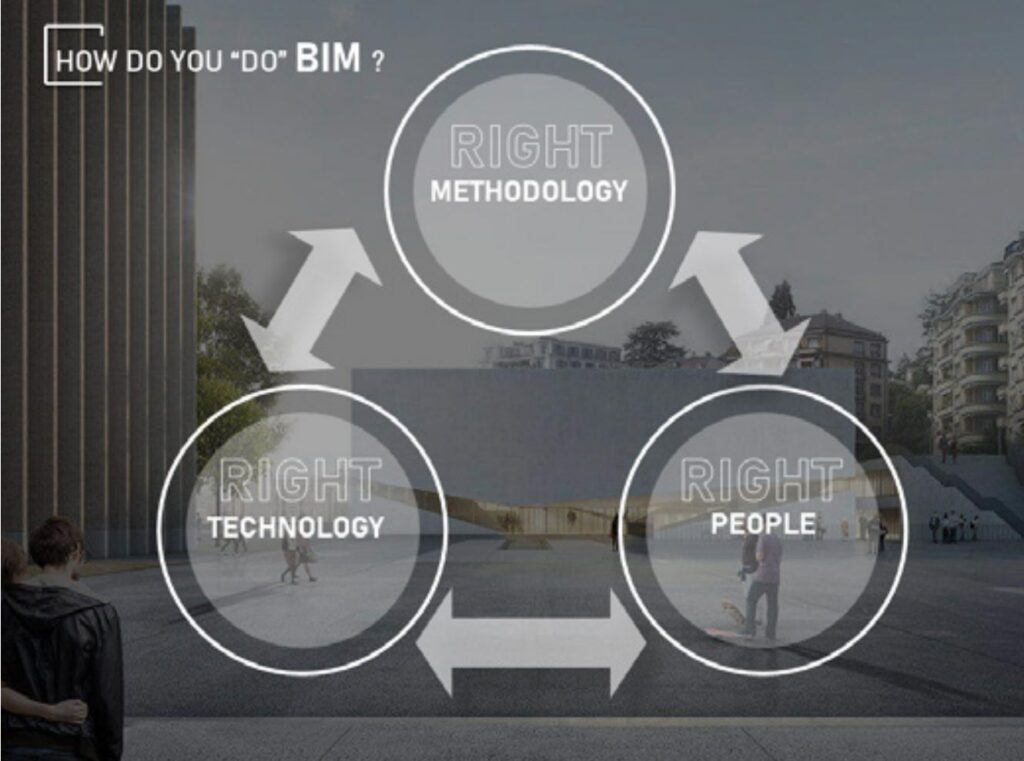
As the only Autodesk Platinum Partner in Africa, Modena provides advice, training and software solutions to a variety of industries – such as the AEC industry, as well as the manufacturing space. “It is extremely difficult for any company to implement BIM themselves without a structured implementation plan. A mistake that many people make is trying to teach themselves Revit. It is always recommended that employees receive Autodesk Accredited training. Obtaining a Revit Certified Professional certification is valuable to both the user and employer, as it communicates a level of Revit competency. Different companies have different needs and different goals and, at Modena, our vision is to see all companies succeed. We spend a substantial amount of time learning about a company’s challenges and finding the perfect solution for that company,” says Venter. She believes that the biggest struggle is the fear of the dip in productivity when converting to a new technology, as well as the frustration. “Often, one has to take a step back to take two steps in the right direction. It is about enduring short-term pain for long-term benefits. I also think that there is the fear of the unknown and fear that the new technology will not provide measurable value. But that is why companies need to partner with BIM specialists like Modena. We assist companies through the entire process. “Another obstacle can be a generation gap. Millennials, Generation Z and eventually Generation Alpha do not typically speak the same ‘language’ as their managers. They have grown up with technology and they are the staff members in the engine room doing the work and using BIM software. Decision-makers, who are usually of a more traditional mindset, are often those who do not use the software personally. Mindsets that proved to be successful a decade ago do not prove fruitful in today’s world. The truth is that yesterday’s home runs don’t win today’s games. It’s important to think of your company’s legacy and how to remain relevant in a fast-changing world,” explains Venter. Improving coordination and clash detection, reducing risk, and enhancing data outputs and sequencing are some of the more well known benefits of BIM. Artificial intelligence, automation and digital twinning are some of the new and exciting possibilities.